I believe, here in the US, we call that our right, correct?
It is through my freedoms provided by my country, I am enabled to do what I want when I want to do it.
Most of us do that within reason, though,don’t we? I mean, if I am running late and I come to a red light I do stop at it even though I want to keep going.
We wait in lines (mostly patient) at stores or amusement parks even though we want to be the first in line.
We teach our children that dessert comes after dinner even though they want it NOW.
Those, and other examples aside, we still want what we want and when we want it.
These days, the word we use to describe that “feeling” is instant gratification.
Other words or phrases that can be applicable to this desire are entitled or privileged.
If we are being honest, this pull to have what we want has also corrupted our faith..we want the benefit of grace without accepting the accountability to God for extending it to us.
We want the gift without the occasion or thank you note.
My son just graduated from high and chose to have an Open House. My husband told him that other than a wedding, this is the primo time in life where people are incredibly generous with their gift giving whether they know you well or not.
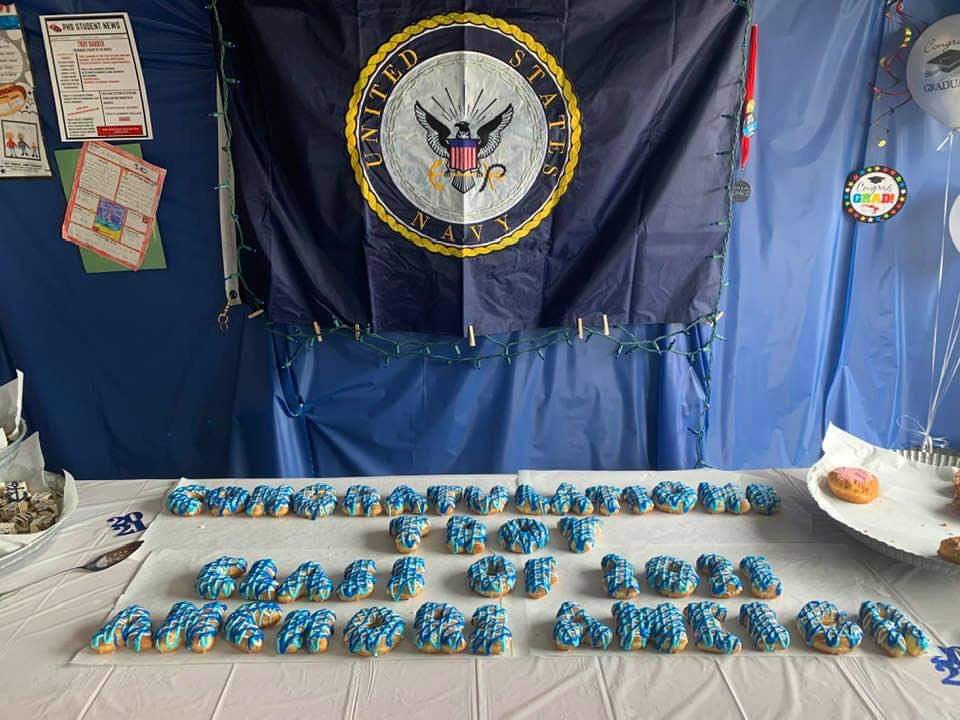
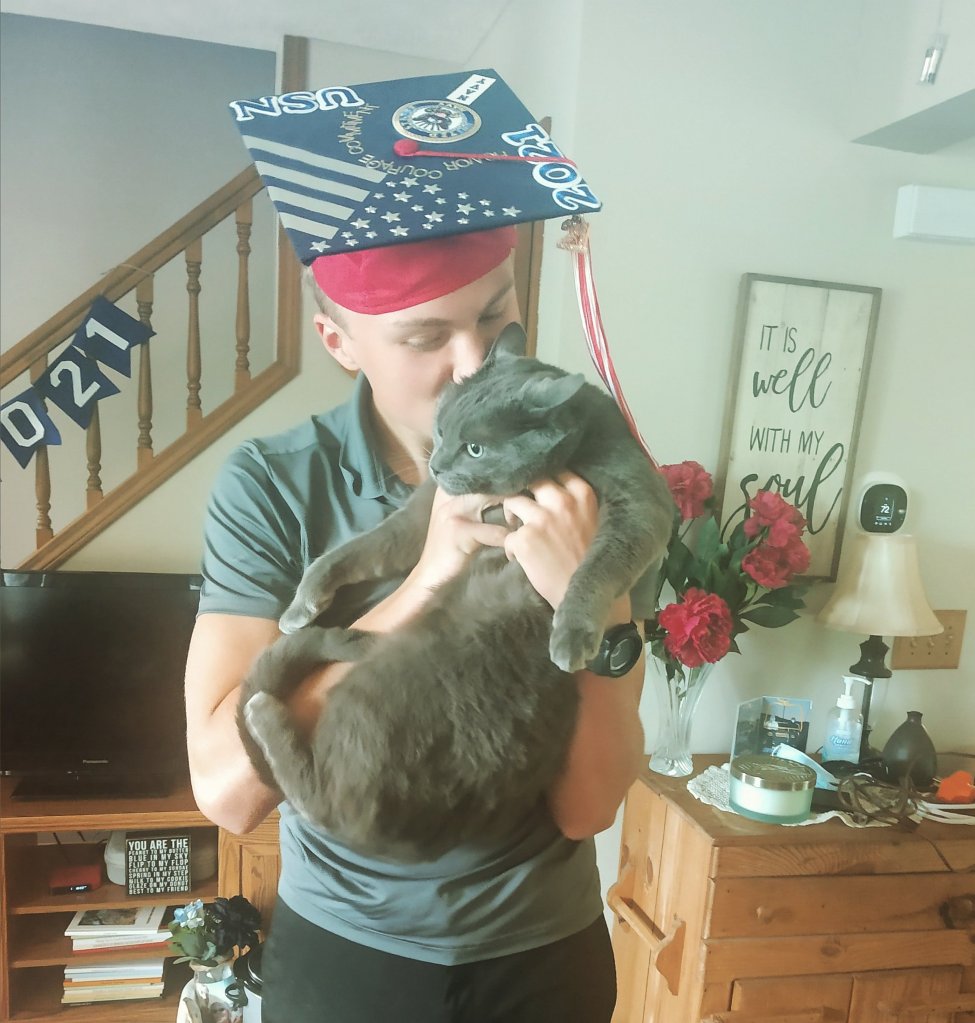
The occasion is his high graduation celebration and entering into the phase of his life (US Navy bound🤗).
His “job” is now to say thank you for the generosity displayed toward him.
Let’s be real, NO ONE likes to write thank you notes, but they are a necessary “evil” aren’t they?
We MUST tell the gift-giver thank you for the gift.
We simply must.
If we don’t?
People notice.
Worse than that?
They remember.
I believe a lack of gratitude comes full circle…think of that person who did not say thank you~ I am going to imagine that was not the first time in their life they did not express thanks. I would go so far to assume they felt entitled to what was given to them so -in their mind- why be grateful?
That attitude catches up to folks. It turns into bitterness in them, NOT the gift giver. The Giver tends to keep on giving, but the ungrateful person becomes unable to appreciate what is been given.
That turns a heart cold.
The gift of God’s grace is no different.
The occasion of grace is twofold:
1) The mere fact that God CHOSE to create us in HIS image 2) Jesus came to ensure our welcome into the family of God
We didn’t doanything for this gift…the occasion is because GOD WANTED TO.
Isn’t that reason enough to be thankful?
Yet it has become too easy to take His grace for granted.
Saying you are thankful and showing your thankfulness are NOT the same thing.
For my son, his Open House thank you note will be sufficient…but that heartfelt hug he gives in gratitude and love will secure the meaning in his words.
With God, our words of thankfulness in prayer are heard…but HE sees our heart to know how much those words really mean.
God sees beyond the thank you note.
In the book of Isaiah, God gives a warning to His prophet. In Chapter 1 verse 15, Isaiah writes:
Even though you offer many prayers, I will not be listening.
AMP
Why would God say that?? His Word tells us:
Your hands are full of blood.
AMP
God goes on to say through Isaiah these words of instruction:
Wash your hands.
Get your evil deeds out of my sight.
Stop doing evil.
Learn to do good.
Seek justice.
Rebuke the ruthless.
Defend the fatherless.
Plead for the widow.
AMP vs 16-17
God sees the heart of His people who pray. He knows sincerity when He hears it.
And our gratitude for His grace will be evident in how we live our lives.
I am somewhat fascinated by the concept of Redemptive Suffering.
Considering that the majority of what I write about and reflect upon is on the subject, I am sure that you-my readers- would agree with that analysis!
Another subject that captivates me is theodicy. This means vindication of God: its purpose is to answer the question of why a good God permits the manifestation of evil.
If there was one question that drove me into a grief counseling class after the death if my sister in law, it was this:
How could a good God allow us to make choices that have consequences that can destroy us??
Ever been there in your thinking?
In my opinion, you don’t get much deeper than that when searching for life’s meaning and where faith fits into it all.
Two words have come into my vocabulary since that question was first formulated, second asked, and third answered:
GRACE and MERCY.
These two words have come to mean a lot to me in my quest for understanding of why bad things happen and why do we suffer.
However, my reflection for today is on another aspect of suffering: why do we admire those who have suffered “well” and yet complain so much about it when it is our turn?
Is there pride to be found in suffering?
Here is where my thought process began:
James 5:10-11
For examples of patience in suffering, dear brothers and sisters, look at the prophets who spoke in the name of the Lord. We give great honor to those who endure under suffering. For instance, you know about Job, a man of great endurance. You can see how the Lord was kind to him at the end, for the Lord is full of tenderness and mercy.
NIV
Can you think of a person, either in your life or one you have read about/seen in the news, that suffered greatly and seemed to come through it with grace and favor?
We do love the underdog who overcomes story, don’t we?
Those people who have experienced great pain or tragedy fascinate society ESPECIALLY when they seem to have a “happy ending” of sorts.
This story of Job that James speaks of? He lost everything. At the end, though, he gained it all back: new wealth, new belongings, new children even.
I must ask this:
Do you really think that having NEW takes away the pain of what he lost???
When we watch those wonderful movies about people who have overcome great obstacles to achieve incredible things, do we really think they have forgotten their pain as they endured unspeakable horrors because they are now on New Yorks Best Seller’s list???
I would say not.
Then why do we admire their suffering?
Why do we despise our own?
If we admire them, we should find pride in our own…correct?
If only…
As James writes, we give great honor to those who endure under suffering.
We admire those who have suffered.
But we cannot feel the same for ourselves.
In our suffering, we feel weak. Useless. Hopeless. Scared.
Do we really think that those we admire and honor felt any different?
Do we admire them because they endured and we know the full story of redemption for them?
Or do we admire them for the redemption only?
Or do we admire them for the enduring?
If I focus on the end of the story for my judgment of approval, I am missing out on the important part: THE PROCESS.
In the midst of the circumstance is where the lesson is …not the outcome.
The reward is what is learned through the process…NOT what is gained after.
For a runner, winning a race would be very nice…but, in my novice opinion, the pride comes from the endurance learned so I can finish.
I think we admire and honor those who have suffered, when we really think about it, because of HOW they endured. We want to know HOW they did it.
And when we know HOW then we know we can do it too.
The HOW is a much better reward than the gains after.
Job called on the Lord and praised Him during his horrific time of suffering. For that, we honor him.
The apostle Stephen looked up to heaven and saw the face of Jesus as he was being stoned…For that, we honor him.
The prophets of the Old Testament were ridiculed, imprisoned, banished, isolated…and yet they continued to speak the Lord’s truth. For that, we honor them.
God provided strength to endurein their suffering as a testimony to us that He will provide the same.
Their life testimony of suffering gives witness to the faithfulness of God so we can be encouraged when it is our turn to endure our own time of suffering.
It is possible to emulate what it is we admire. We do so when we try to sing like our favorite singer, style our clothing like our favorite actor, work out and eat like our favorite athlete.
Why not do the same with those who have endured?
Discover their HOW…and do that.
And then discover the Lord’s tenderness and mercy for yourself.
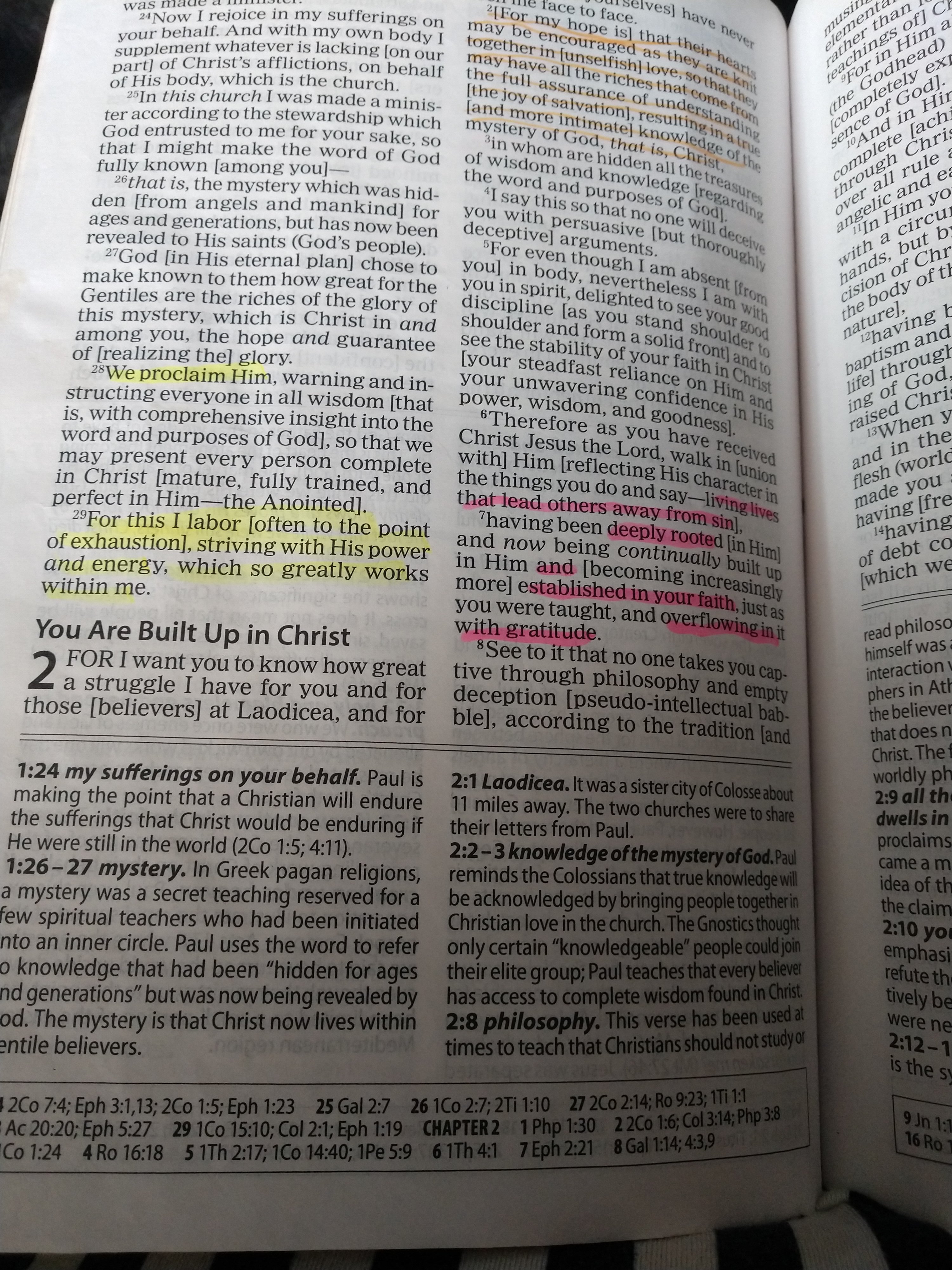
This passage is by the apostle Paul writing to the church in Colosse. He was writing to encourage them in their faith because they had issues swirling around them much like the Church still has today: syncretism (the tendency to regard other philosophies and religions as equally valued as Christianity).
The church in Colosse wanted to believe in the truth taught by Christ, but they also wanted to hang onto their own old beliefs by blending what they had previously lived into the gospel.
Paul reminds the church that God had reconciled them to Him through Christ even while they (and we) were estranged from Him.
It is because of this that Paul says:
“Now I rejoice in my sufferings on your behalf.”
The suffering that Paul endured is being compared to the suffering that Jesus would still be enduring if He were walking in the flesh in this world today.
Jesus was persecuted repeatedly for calling out the hypocrites in the Church… the leaders that favored power and greed over love.
Jesus was persecuted for loving those unseen by society instead of preferring the company of the “popular crowd”.
Jesus was persecuted for His blatant refusal to judge and punish a person who had sinned based on man’s measurement of what sin looks worse.
Jesus was persecuted for seeing the real need of a person while still healing their infirmities.
Jesus was persecuted because He lived life by God’s Law (to love God and others) and NOT the law made by men to keep people in line and was to be kept no matter the outlying circumstances.
Jesus was persecuted because He showed grace and mercy.
What He died for caused many to be scared because His very existence rocked the boat of legalism and control.
This is the suffering that Paul speaks of that he can rejoice in.
When Paul is beaten for teaching the truth, he rejoices for He is like Christ.
When Paul is arrested for reaching out to those in need in ways that goes against the legalistic rules of society, he rejoices for he is like Christ.
When Paul is banished from a town, stoned to the point of near -death, starved and cold because he has no place to stay…he rejoices.
Why?
For he is like Christ.
Can I say that?
Paul says his suffering is for your sake…He means the church’s sake…those in Colosse…those who read his letters…us.
He suffers so they don’t have to…just like Christ.
His suffering paves a way for them so they don’t have to…just like Christ.
His suffering gives them an example to follow when their time of suffering is inevitable…just like Christ.
Again I ask~
Can I say that??
Through hindsight I can see where my suffering is for the greater good of others. The Lord has enabled me to see where His goodness surrounded me through the trials I was enduring.
Looking back I can see so clearly.
In the moment, however….it is a struggle.
I was once taught to draw a timeline of faith where I would pinpoint where God had sustained me throughout my years. This timeline, much like the commands given in Exodus to remember what the Lord has done, provides encouragement through my current struggles.
I need to choose to remember where the Lord has carried me through before though.
One way, to aid my memory, is to read my Bible daily. It seems a simple task…yet the discipline of reading every day is one of the most challenging things a Christian will face in their faith.
By choosing to intentionally read my Bible, I see the notes in the margins I have made over the years and the passages I have highlighted.
I also receive new insight from the Lord as His Spirit opens my eyes to Scripture as I read it as if I had never seen those verses before.
But, by daily spending time in His Word, I am also in the habit to continue to do so when those times of suffering are upon me. Suddenly, I am in a position to remember the faithfulness of God.
When I am thankful for what He has done, I can find peace in knowing that He is still doing, and be hopeful for what He is yet to do and will do.
Thankfulness leads to peace which leads to hope.
Therefore I CAN rejoice in my suffering because it is not all about me anymore…My suffering, my struggle, my pain, my sickness, my insecurities, my fear, my sorrow are ALL for your sake.
I can say that because God will use every last little thing that I give Him for His good and His glory.
He will use my suffering on your behalf…to be an encouragement to you…to shine a light in the dark spaces…to offer HOPE in a hopeless place.
If there is a PURPOSE for my pain then my pain becomes worthwhile.
And because I desire to follow the command given by Jesus to love my neighbor as myself, I can be better prepared to say “USE MY SUFFERING, LORD, SO OTHERS DON’T HAVE TO GO THROUGH WHAT I DID.”
If others can learn from my example then so be it Lord.
It may seem a silly analogy, but it is anything BUT silly to me.
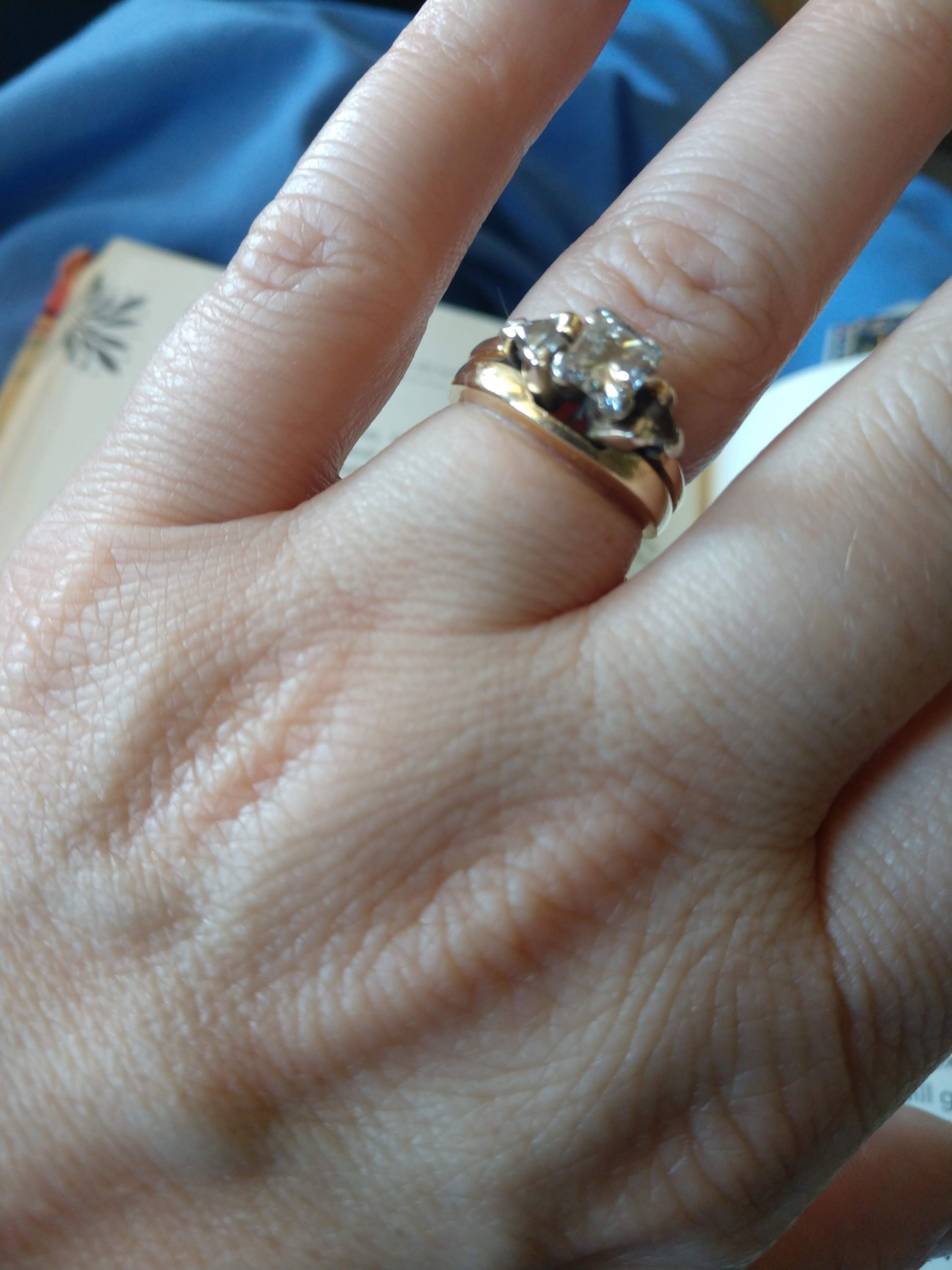
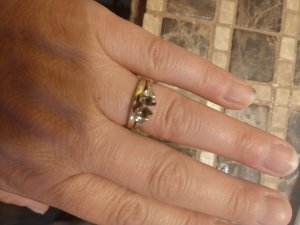
After almost 22 years of marriage, this ring has not been off of my finger. It was given to me almost 25 years ago near Old Mission Lighthouse on Grand Traverse Bay.
The center diamond fell out and is forever gone.
For a wife…a bride….this is devastating.
It can be replaced, but it will NOT be the same.
It could be made new, but then it would not LOOK the same.
In my life, I have known many things…but a realization about CONTENTMENT with what I HAD has now come flooding over me.
I don’t NEED new. I don’t WANT an upgrade.
I was perfectly content with what I had and what I had is what I want.
It would have been “easy” to be swayed by the other sparkling options…a different color setting more fitting for the times than my archaic gold…to jump on an opportunity for change due to the circumstances…
But I was content. I AM content.
I am thankful to have been given what was given to me in a declaration of love.
I am thankful for the life that sprung out of our commitment of marriage.
Why ask for more when what I had been given was MORE THAN ENOUGH?
I have to make a change- I am forced to because of the loss…the reality is that my ring will not be the same…but I made a choice: I have chosen an option as close to the original that I possibly could.
It will be SIMILAR yet different.
Just like we are now after 22 years of marriage, with a son heading off to the Navy, and the other growing up quickly before our eyes.
It will be different just as my hands look different from the young woman’s hand that first recieved her ring from her beloved.
But… that’s ok.
I’m going to notice the difference and I will appreciate the difference.
Why is that?
Because I know I was content with what I had… therefore I can be thankful for what I have been given next.
The book of Genesis is full of incredible accounts of God visiting His chosen people! If you have not spent much time in Genesis, I would highly recommend a revisit sometime soon!
Abraham is considered the Father of the Israel people (as a child, I sang a song in Children’s Church called “Father Abraham had many sons” 🎵).
Abraham was quite up in his years when God told him that his wife (a woman who had never born a child) would give birth at the age of near 100.
Slight digression: my high school prom date just delivered his first child (a set of twins actually!) at the ripe age of 45…the mere thought left me exhausted!! Happy for him,but exhausted!! I thought 45 sounded old to begin parenting…and here Sarah is in her 90’s!!!
Back on track:
So…needless to say when the promise God gave to Sarah and Abraham was not fulfilled in their timeline➡️ Sarah took measures into her own hands and told her husband to go procreate with her maid so she could have a son that way.
Times were different then folks….this was an acceptable custom🤷
Hagar (the maid) gave birth to a son and named him Ishmael. This, in and of itself, is a whole story that won’t be unpacked here today.
God reminded Abraham and Sarah that it would be through Sarah that Abraham’s legacy would be given and not through their micromanaging that resulted in the birth of Ishmael.
Sarah becomes pregnant and gives birth to a son.
She names him Isaac~ which means laughter. Can you imagine the joy he must have given her???
Genesis 21:9-10
As time went on, Sarah saw Ishmael -the son of Hagar- mocking Isaac. Therefore, she said to Abraham, “Drive out this maid and her son, for the son of this maid shall not be an heir with my son Isaac.
AMP
This seems harsh, doesn’t it? Drive them out…
Abraham was, of course, distressed over this request. Ishmael was his son…no matter how or why he was conceived, Ishmael was his child- his firstborn even.
Sarah’s point was clear- Ishmael will not be an heir with my son.
God’s response to Abraham was pretty brutal in its honesty…
Genesis 21:12
Do not let it distress you because of Ishmael and your maid; whatever Sarah tells you, listen to her and do what she asks, for your descendants will be named through Isaac.
AMP
God also informs Abraham, as a form of comfort perhaps, that a nation will be named through Ishmael as well. But that nation is not, and never was going to be, the nation that God had chosen to be His people.
Abraham sent Hagar and Ishmael away.
Talk about a mess of a situation.
This was the second time Sarah had cast aside Hagar- the first was told to us in Genesis 16. Sarah had told Abraham to lie with her maid and after he did….she got jealous because the maid got an attitude of superiority over achieving what Sarah could not.
Sarah got angry because Hagar had what Sarah had willingly given to her.
Here we are again with Ishmael and Isaac where the older brother picks on the younger… A repeat of a superiority complex maybe?
Regardless… the mother bear in Sarah wakes up and sees that Ishmael has got to go. Picking on her son was not going to happen…especially by someone who would ultimately feel entitled to receive all that would be given to Isaac. For Sarah- that would never happen.
In all honesty, that would never happen for God either.
God had a plan. He told Abraham (and Sarah) the plan. They chose a different route to bring that plan to fruition.
THEY changed the way the plan would occur…not God.
Their involvement led to a sticky situation.
If they would have KEPT THEIR HANDS OUT OF IT things would have been far less complicated.
“This complicated situation was part of the price Abraham had to pay for trying to bring about God’s promises in his own time”.
AMP Study Note
Wow.
Do you have difficulties in your life? If you are willing to be 100% honest could admit that there is a chance some of the complications are due to your own choices?
Ouch.
It is easy to blame God for the difficulties in our lives…He is sovereign after all. He is the Alpha and Omega.
But, like with Hagar, He didn’t make you choose certain behaviors that led to the place where you are right now.
He isn’t that kind of God.
A loving God lets His people choose to follow His wisdom and counsel.
A dictator makes puppets out of his followers- giving them no choice to make without a threat of punishment.
Every choice we make has a consequence~ either good or bad.
Every choice.
I ask again, is there a difficulty in your life that you are trying to entangle due to the complication you may have created on your own efforts?
Some complications are created by the efforts of others that we pay a price for…that we have either accept or work very hard to disentangle ourselves from.
I can’t help but think of the environment issues…I highly doubt the person who invented plastic bottles, pesticides, or exhaust fumes to ever dreamt they could impact our earth so negatively…Yet, here we are.
The important thing to remember is how God handled the “complication” (named Hagar and Ishmael): with mercy.
God always provided for them.
Did they receive the inheritance of Isaac? No…because that was never the plan. However, their role in that situation was not their fault either so God gave them a life in Egypt.
God continues to provide for us even as we create our own complications or begin to entangle ourselves from our self imposed complications.
God provides wisdom… medication…comfort…mercy…grace…forgiveness…LOVE.
If you find yourself in a place that you believe God did not intend for you to go, He WILL provide a way out and back to Him.
It may be painful…it may require humbling yourself in admittance that you made a mistake…it may take a sacrifice on your part to return to the pathway of peace…it might mean paying the penalty of the choice that had been made…
David also said to Solomon, “Be strong and courageous, and do the work. Do not be afraid or discouraged, for the Lord God, my God, is with you. He will not fail you or forsake you until all the work for the service of the temple of the Lord is finished.”
NIV
King David had come to the end of his days and was commissioning his son, Solomon, to use the plans to build the temple that he had made.
1 Chronicles 28:2-3
King David said, “I had it in my heart to build a house as a place of rest for the ark of the covenant of the Lord, for the footstool of our God, and I made plans to build it. But God said to me, “You are not to build a house for My Name, because you are a warrior and have shed blood.”
NIV
Solomon was the appointed next king of Israel after the death of King David and was obligated to fulfill God’s will for the nation. King David had instructed that the temple was not for man but for the Lord and was to be a visible witness for God to all other nations.
Following in the footsteps of David would have been no small feat for Solomon. He already was opposed by his brothers for his place on the throne as he was not the first born son to the king. He was, however, appointed by God to rule.
Solomon’s heritage is that he was the second born son to Bathsheba and King David- his infant brother died as a consequence to the sin of David’s affair with Bathsheba and subsequent murder of her husband as a means for cover-up.
1 Chronicles 28:5-7
Of all my sons- and the Lord has given me many- He has chosen my son Solomon to sit on the throne of the kingdom of the Lord over Israel. He said to me, “Solomon your son is the one who will build my house and my courts, for I have chosen him to be my son and I will be his Father. I will establish his kingdom forever if he is unswerving in carrying out my commands and laws, as is being done at this time.”
NIV
Talk about pressure.
Have you ever felt the pressure to either begin a task that was really important or to finish a task that another person -who you believed to be more capable -had started?
Have you ever felt the weight of the world on your shoulders as you were trying to make a decision about something?
Using that context, I can’t help but to think about high school seniors. They have been following all the rules set before them for years; they have been going where they were told to go and to stand where they were told to stand. They wear what is “allowed” to be worn according to school dress codes, they eat when they are told to eat, and they even study what they are told they need to study in order to graduate.
AND NOW THEY ARE ON THE CUSP OF HAVING TO MAKE ALL THOSE DECISIONS FOR THEMSELVES UPON GRADUATION.
It sounds exciting to them, doesn’t it? To be able to go where I want, study what I want, not study if I want, eat what I want and when I want, and to wear whatever feels comfortable or strikes my fancy.
Suddenly, every decision for their future is now in their own hands.
Do I want to go to college? Which one? For what?? How do I pay for it???
Do I follow in the career path of my parents? Do I have to take over the family business?? When do I take it over since the folks are still working at it???
Do I get a job? What kind of job??
Do I go into the military? Which branch?? And to do what???
In an instant there are a multitude of choices waiting to be chosen…
It can be overwhelming.
Especially if you do not have a specific plan and feel like you need one.
Solomon was taking over the kingdom from a well-loved, widely respected, completely capable, warrior king that was rumored to have been described by GOD to be a “man after God’s own heart” (1 Samuel 13:14).
David was leaving Solomon with strict, well-thought out instructions on how to rule and if Solomon followed those instructions then the prosperity of Israel and the continuation of David’s descendants on the throne would be ensured.
All Solomon had to do was what he was told.
There it is again… Can you feel that pressure?
Imagine there is something that is being asked of you to do…
Do you feel you are capable of accomplishing it?
Do you feel you are equipped to get it done?
Do you feel confident in your life-skills as a person?
I think it would be easy to initially answer with a “yes…sure…I could do it” once we knew what it was that was being asked of us and that thing was within our “toolshed” of experience.
But what if it is something you have never done before? What if it is something that takes you out of your comfort zone? What if it is something that requires a lot of your time and money or resources? What if it goes against the grain or the plan that was set out before you for many years?
You would KNOW it needs to be done and you have a feeling that you ARE the one to do it…yet, the hesitation to say “yes” is quite strong.
The desire to settle for the answer of “I don’t think I can” is soon taking shape on your lips.
Solomon does not have that luxury to say no or to hesitate. If he says “no thanks- I’ll pass” or does not do things the way he is told to do them, then the consequences are very grave for him, his people, and his legacy.
That pressure starts pushing heavier…
You can’t say no…You have to do it…You have to do it well…You have to do it right.
I would be very afraid to make a move with that kind of pressure looming over me when I realize that there is a lot at stake here.
Is there something that you KNOW you should be doing but you are not?
Is God calling to you do something, go somewhere, say something and you are wondering if He has asked the wrong person because there is something not matching up with His request and you?
What holds you back from being obedient?
That’s what it is, you know…being obedient to the Lord…
Does doing what the Lord has called you to do make you feel afraid?
will you have to give up something to do it?
will you lose something to do it?
will it cost you something to do it?
will you be embarrassed if you do it?
what if you don’t do it perfectly and stumble in your efforts?
what if it changes you if you do it?
what will people think if you do it?
David had clear words of wisdom for his son:
Be strong (tough, fit, hardy, mighty)
Be courageous (fearless, adventurous, spirited, audacious, daring)
AND DO THE WORK.
As a good father, David says to JUST DO THE WORK.
DO the job.
DO the task set before you.
DO what God has called you to do.
Then, David gives this encouragement for Solomon:
DO NOT BE AFRAID OR DISCOURAGED.
How could David say that when the task set before his son is almost unattainable??
Because…
The Lord -MY God (remember David is a man after God’s own heart) will be with you.
He will not fail you.
He will not forsake you with the work not completed.
David would know best that God is faithful to complete what He has started…God was not going to go against His promises now.
“David advised Solomon not to be frightened about the size of his task as king and builder of the temple. Fear can immobilize us. The size of the job, its risks, or the pressure of the situation can cause us to freeze and do nothing. One remedy for fear is found here-do not focus on the fear; instead, get to work. Getting started is often the most difficult and frightening part of a job”.
NIV Life Application Study Bible Note
Don’t be immobilized by your fear of the risk, the job, or the pressure of the situation. JUST DO THE WORK. Get started. Trust that God has equipped those He has called and never leaves us until His job is completed.
Knowing the conclusion of an experience helps to determine our perception of an experience either while still in the middle of it or standing at the beginning.
And I heard a loud voice from the throne saying, “Now the dwelling of God is with men, and He will live with them. They will be His people, and God Himself will be with them and be their God. He will wipe every tear from their eyes. There will be no more death or mourning or crying or pain, for the old order of things has passed away.”
NIV
Have you ever read the end of the book so you know the conclusion of the story as you work your way through a piece of literature?
Do you read the reviews of movies or TV shows and watch the previews before watching that show or movie for yourself?
Do you look at the faces of those walking off of a rollercoaster ride to search for a sense of an extreme thrill with fun or to see if they have misery written all over them?
Do you look at the plates of others at a restaurant to see what they order before deciding what you want to eat?
Knowing the conclusion of an experience helps to determine our perception of an experienceeither while still in the middle of it or standing at the beginning.
Knowing the conclusion INFLUENCES the entire storyline as we maneuver through the book or movie- doesn’t it?
Knowing the conclusion IMPACTS our own level of excitement while waiting to ride a rollercoaster.
Knowing the conclusion ALTERS our menu choices when we see how desirable a meal looks on another’s plate.
Remember the movie the Sixth Sense? Imagine watching it for the first time and knowing the ending because someone had spoiled the surprise by sharing it with you! The movie would suddenly take on a whole new meaning because the ending is known.
On the other hand, have you ever been in line for a ride, but you could not see much of where the ride was going to take you (perhaps it is in the dark) and you were not positioned to see anyone get off the ride so you could not see what their reactions were? All you could hear was their scream as the ride commenced and then nothing else.
With the movie? I’d be ticked! Half the entertainment is watching the characters find the resolution created by the writers. There is nothing like that “AHA!” moment!
With the rollercoaster? My anxiety would shoot through the roof as I waited for my turn! My excitement is enhanced when I see the thrill on others faces as they exit the ride I am waiting to go on. When my excitement overrides my anxiety I can enjoy myself all the more fully!
It is no different for us when we think about the conclusion of our own lives…our own stories.
When I think about what it is I am afraid of one of the first things I try to do is figure out what the outcome is going to be and how I will react in that scenario.
-THIS IS NOT ALWAYS THE BEST WAY TO SPEND MY TIME AS IT TENDS TO WORSEN MY FEELINGS OF FEAR-
However…it is a natural way to process big deal issues that we are working through or facing that make us afraid.
Let’s be real for a moment-
What is it that I am afraid of?
My friend dying of her cancer.
Why does that cause fear for me?
Because I do not want to feel that depth of pain associated with grief. I do not want to miss her. I do not want to feel the depth of agony that is inevitable when I watch her family learn to cope with her gone. I am scared of living the rest of my life without talking to anyone else the way I can talk to her.
How about another~
What is it that I am afraid of?
My son graduating from high school and leaving for the Navy.
Why does that make me afraid?
I am scared of what will happen to him: will he be hurt? will he quit following the Lord? will we not be able to see him for a very long time? will our family ever be the same with him coming and going as an adult who does not “need” his mom anymore in the way I am accustomed to providing? what if he does not want the same relationship with us, his parents, as we desire to have with him as an adult?
Ugh….This sharing hurts, but I can do another-
What is it that I am afraid of?
Illness and suffering within myself.
Why does that cause me fear?
I have dreams that I want to accomplish, a life I want to live…what if I can’t due to illness? What if my Crohn’s disease changes again and brings tremendous pain or debilitating fatigue that keeps me from functioning in the simplest of activities let alone in some of the more strenuous ones? What if Covid overtakes us again? What if these vaccines do not work? What if there are crippling post-Covid illnesses that we have yet to uncover that causes mass illnesses in those who have contracted it?
Last one-
What makes me afraid?
Insignificance.
Why would that cause fear?
The voice in my head that tells me I am not “good enough” would be right.
Do you have your own list?
When I try to figure out the conclusion on my own efforts, I find that I circle the pit of possibilities that enslave me to fear. In my effort to seek for control of a situation to alter the outcome I am desperate to achieve, my anxiety begins to cripple and oppress me while I start to crush relationships between my fingers that are squeezing too tight in an effort to hang on.
In one of the Lord’s many revealed ironies, the conclusion He provides rarely gives me a direct answer for any of the issues that I am waging war against. The revelations He gives does not tell me that:
my son will be ok
the pain of losing my friend will not hurt or severely impact me
my illness will not overcome me
Covid will disappear
Then what does God’s conclusion tell me?
FOREVER MORE THERE WILL BE NO MORE DEATH, PAIN, SORROW ,OR CRYING.
“No matter what you are going through, it is not the last word- God has written the final chapter, and it is about true fulfillment and eternal joy for those who love Him.”
Life Application Study Bible NIV
This verse tells me…AT SOME POINT…all that we suffer through, that causes us pain and fear, will be no more.
Yes, I will experience loss in this lifetime.
Yes, I will experience sickness and death in others and, most likely, myself someday.
Yes, I will experience disappointments and failures mixed in with achievements.
Yes, I will lose control over the things I foolishly thought I owned and managed, but were never mine in the first place as they were gifts entrusted to me by God.
Yes, there will be and are already legitimate reasons for me, and you, to become afraid.
But, in the face of all that, we have an even larger reason to be UNAFRAID:
WE KNOW THE CONCLUSION OF GOD’S STORY…A STORY WE HAVE BEEN WELCOMED TO BE A PART OF THROUGH OUR FAITH IN JESUS CHRIST!
His conclusion has always been to wipe away the tears from our eyes as we come to live life eternally with Him in a place that there will never be darkness and will need no light for He IS the only light that will be shining.
This side of eternity hurts. I cannot downplay that…it is what it is. With sin in this world and an enemy doing everything he can to keep us from spending our eternity in freedom, brokenness is prevalent. With sin and brokenness comes death, dying, illness, and pain.
But through the work done on the Cross by Jesus, comes REDEMPTION for that sin, HEALING for that brokenness, HOPE through the death, dying, illnesses, and pain.
One day it will all be no more…and therein lies our hope.
Until that day of final victory~
We wait.
We endure.
We perservere.
We share the Good News to others that they have something to hope for too.
We trust in the Lord to provide for us in our need.
When you pass through the waters, I will be with you.
When you pass through the rivers, they will not sweep over you.
When you walk through the fire, you will not be burned; the flames will not set you ablaze.
For I am the Lord, your God, the Holy One of Israel, your Savior.
NIV
This is truly one of my favorite verses from the early days of being a new Christian. In those days, I inwardly struggled with a new identity in Christ that was different than my friends or husband. Those struggles often turned outward and discord would arise. I frequently felt very lonely and, eventually, fearful for my marriage’s survival.
As time went on, this verse would come to mean different things to me: my marital situation greatly improved with my husband’s salvation, but another circumstance would seem to arise that would test my faith. And then another.
Over the years, the ebb and flow of life has been dauntingly wonderful in the perspective of the Lord’s love for me and His plan for this world’s redemption.
Without the filter of my eyes of faith, I would say things have been hard. Frustrating. Scary. Uncertain. Painful.
I have passed through the waters.
I have walked through the fire.
I was just saying the other day in a moment of absolute transparency, that I have moments when I wish I could just stop caring…because caring for others hurts. It hurts me in my heart and deep into my bones.
If I continue to be absolutely honest, I have moments where I wish I could be like the nice lady who told me about a good Samaritan:
A healthy man in his forties stopped on the side of the highway exit ramp to assist the young teenage girl who had pulled over with obvious car difficulties. One could assume that he made the choice to help her because he hoped someone would do the same for his wife/daughter/mother/son as he was doing.
Perhaps his act of kindness would be returned if the need arose.
While assisting the girl, he was struck by another car and was left paralyzed from the neck down.
From what I was told, his story did not end with a vibrant, overcoming conclusion. He died early on in his recovery secondary to complications.
The response of the woman who told me the story was “and that is why you don’t help people. It only gets you hurt.“
Yes. It does. But is not helping, not caring for the needs of those around us, really the answer???
I have had my own physical issues that have threatened to overwhelm me, but the majority of my hurts through the years have come through the relationships I have with other people and their life issues.
If you walk around in this world, you are bound to begin caring for people- even loving them. Things tend to happen in their lives that you cannot dictate nor control…and those things have a way of “intersecting” with your nice, neat little life; more like being t-boned in a car crash.
I am not wanting to sound condescending, but I want to throw some questions out to you~
Did you know that there are people in this world that suffer from mental illness causing serious depression and suicidal ideation or eating disorders? Do you realize that “help” for them is marginal and limited so recovery is incredibly expensive and difficult?
Did you know that there are people in this world, maybe even in your neighborhood, that have cancer? Are you aware that those people suffer immensely, are terrified most of the time, have families that are achingly watching their loved one disappear in front of their eyes, and that there is no real guarantee of a cure or remission so people can actually die from it?
Did you know that there are people in this world, even in your church, that have marital crises that can end in divorce? Did you know that divorce has a domino effect onto the lives all around that marriage and not restricted to their children only? Have you ever thought that the devastating effects of divorce is limited to the two married instead of thinking about every single personwho hasloved that couple over the years and that “one divorce” can end OTHER relationships surrounding the situation?
Did you know that this world suffers from a serious problem with addiction? Have you considered to think that the “addict” was someone’s child, brother/sister, friend, cousin, or spouse at one point in their life? Have you thought about the possibility that this addict played happily as a child, was rocked by their mother in the night, felt the bliss of a first kiss, or the absolute joy of giving birth to a child of their own?
Did you know that sepsis can end the life of someone in two short weeks? Or that COVID can rip a family apart for months through the isolation of treatment and that person who is ill actually does die alone? Unless they are lucky enough to have their spouse at their bedside for that last breath, but only after she determines to end his life- sustaining treatment in an agreement with the hospital’s grey area visitors policy regarding Covid: you cannot be there when they are sick but you can be by their side when they are dying.
These issues, these specific issues, have broken my heart one right after another as the waves of grief keep surging.
I do care…so I hurt. My heart breaks for those I know…for those I am allowed to be around for this painful part of their story.
The waters we pass through are deep and murky, the rivers we go through have rapids,fierce undertows, and strong currents we cannot swim against, and the fires we walk through are HOT.
BUT~
This verse tells us to FEAR NOTbecause God will be with us in the waters, that the river water will not sweep over us, and that the fire will not burn us.
Notice that it does not say we won’t feel the effects of the deep, murky water, the strong current with an undertow in a river, nor the heat from the fire.
Notice that it does not say we won’t be IN the water, the river, or the fire.
In fact, it pretty much guarantees we will be in all three at some point in our lives!
We are told to be UNAFRAID because we have a reason to be confident in the face of treacherous circumstances. This confidence comes from being redeemed by God: He has called us by our name and claimed us as His.
Redeemed is defined as being bought back (repurchased) and freed from what distresses or harms us.
GOD has done that…purchased us as His own and freed us from distress and harm… our confidence is found when our identity issecure as a child of God.
We will not be IMMUNE from the situation or circumstance that causes distress or could bring harm…but we are promised that these conditions will not drown us or set us ablaze:
2 Corinthians 4:8
We are pressured in every way (hedged in), but NOT CRUSHED.
We are perplexed (confused), but not driven to DESPAIR.
We are hunted down and persecuted, but not DESERTED or ABANDONED.
We are struck down, but never DESTROYED.
AMP
See how the passage from the apostle Paul speaks of hardships? The wish to be immune from suffering is nowhere listed…but a certain strength through the suffering is instead offered.
I may feel the pain and hurts that surround me but they will not crush me, lead me to despair, leave me abandoned, or destroy me- there is another alternative!
God is not necessarily offering us a supernatural option that was provided to Meshach, Shadrach, and Abednego as told in Daniel 3 (although that is ENTIRELY possible!) which was to walk out completely unscorched by a literal fiery furnace. What He IS offering is Himself, the One who created us and formed us, through the trial.
This passage is written by the prophet Isaiah as a message from God to remind the people of Israel that He had created them and were special to Him. He had redeemed them and called them by name to be a people who belonged to Him whom He protected in times of trouble.
We have also been created in His image and called to take on His name- the name of Christian. His name gives all that is given to Christ; we are coheirs with Him!
I love the song by Jeremy Camp called Same Power as it reminds me that the “same power that rose Jesus from the grave lives in us.” That same power is part of our inheritance!
For God IS the Holy One of Israel and our Savior we do not need to be afraid: His power is alive in us!
“Going through rivers of difficulty will either cause you to drown or force you to grow stronger. If you go in your own strength, you are more likely to drown. If you invite the Lord to go with you, He will protect you”
NIV LIFE APPLICATION STUDY BIBLE
Personally, I am facing a river of difficulty. As waves of grief wash over me, I become more and more emotionally exhausted. The prospect of what it to come is overwhelming and frightening- especially if I dwell on it. That is MY choice: to choose to think about what has not happened yet or what makes me afraid OR what the Lord can and will do through this situation. My choice will determine whether I will drown or thrive within my difficult days.
When I look at this verse, I am reminded of what the Lord has done for me through different times of deep water and walking through flames…those times did NOT destroy me, crush me, lead me to despair, or leave me abandoned.
I may have been bruised or almost broken, but the Lord healed my hurts and put me back together. He also REDEEMED THOSE HURTS and used them for His glory.
What He has done before HE WILL DO AGAIN because I am His and He is mine.
That is MY confidence!
What waters are circling around you that threaten to overwhelm you?
What rivers are you passing through that are threatening to wash over you?
What are the fires in your life that are threatening you with its heat that burns?
FEAR NOT, FOR YOU ARE REDEEMED…YOU HAVE BEEN CALLED BY YOUR NAME AND YOU BELONG TO THE LORD. HE WILL BE WITH YOU EVEN IF THE WATERS SWEEP OVER YOU. THE FLAMES WILL NOT SET YOU ABLAZE IN THE FIRE.
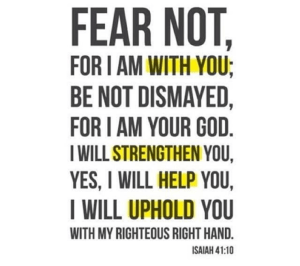
“Do not fear {anything}, for I am with you; Do not be afraid, for I am your God.I will strengthen you, be assured I will help you; I will certainly take hold of you with My righteous right hand {a hand of justice, of power, of victory, of salvation}”.
AMP
This is one of the creme de la creme of Bible verses about becoming UNAFRAID.
It has it all:
What should I NOT fear? ANYTHING.
Why should I not fear?
GOD IS WITH ME.
GOD (YAHWEH) IS MY GOD.
How will God help me be UNAFRAID??
Will STRENGTHEN me
Will HELP me
Will TAKE HOLD OF ME
What is so special about His hand that holds onto me?
It is RIGHTEOUS
It is a hand of JUSTICE
It is a hand of POWER
It is a hand of VICTORY
It is a hand of SALVATION
There is a lot going here to dissect, but first it is important to look into the context of this Scripture before beginning to apply it to our lives.
This book of the Bible is written by the prophet Isaiah. Isaiah was chosen by God to give counsel against foreign alliances to the kings of Judah (Northern Kingdom of Israel). He is well known for his prophecies of the coming Messiah that were fulfilled in Jesus Christ. He also, although his messages from God were of judgment, offered a great hope to the people about God’s faithfulness and mercy even though they continued to disobey His given Law. Isaiah reminded Israel of the covenant made by God that God would never refute.
By the time we get to our passage in chapter 41, Isaiah is encouraging the people after declaring the judgment that is to come upon them~
Isaiah 39:6-8
Listen carefully, the days are coming when everything that is in your house and everything that your predecessors have stored up until this day will be carried to Babylon; nothing will be left.
And some of your own sons (about King Hezekiah) who will come from you, whom you will father, will be taken away, and they will become officials in the palace of the king of Babylon.
Then said Hezekiah to Isaiah, “The word of the Lord which you have spoken is good.” For he thought, ” There will be peace and faithfulness in my days.”
The start of chapter 41, as we move closer to our selected verse, tells of the glory of God~
Isaiah 41:4
Who has performed and done this-
Calling forth (and guiding the destinies of) the generations from the beginning??
I, the Lord – THE FIRST, AND WITH THE LAST {EXISTING BEFORE HISTORY BEGAN, THE EVER-PRESENT, UNCHANGING GOD} – I am HE.”
AMP
So….when He says do not fear anything for I am with you, He means the One who existed before history began is with you.
When He says do not be afraid, for I am your God, He means the EVER-PRESENT UNCHANGING God is your God.
He is constant.
His faithfulness is never-ending.
He keeps His promises no matter what we do in our ups and downs of life- God still works out HIS plan for HIS good and glory.
The God of justice, of power, of victory, of salvation is who strengthens and holds onto me.
Because of His faithfulness we can be assured of His help.
How does this help me to become UNAFRAID?
What do I do when I can’t see His right hand holding me when I am scared? In fact, the fear normally makes me feel alone…whether I am physically or not.
Confession time:
I’m 45 years old and I still have bad dreams.
When I was a kid, I used to seek comfort by waking my mom up to inform her that I had a bad dream and would crawl into bed with her and my dad.
As I got older, that got weird so I would choose to make a nest on the floor beside my mom’s side and would seek the comfort I needed from the space on the floor.
As I got even older, it now felt foolish to go wake up my mom to tell her I was scared so I found I could sneak into my brother’s room and curl up unnoticed at the foot of his bed.
Desperate times man….
As an adult, I smash myself into my husband’s back for confirmation that I am not alone when those dreams haunt me.
Sometimes that stuff worked.
Other times, I needed more.
As a kid, we (my parents and I) decided that it was best if I would read before going to bed instead of watching TV. I learned (the hard way of course) what I read was incredibly important!!
FYI- books about vampires are NOT relaxing!
When the dreams still came, no matter my bedtime routine, there were times when I realized at a very young age that I needed something more.
I took to singing Jesus Loves Me in my head or even with a soft whisper. No matter my age…no matter how far I had wandered from the Lord…I would sing it.
I still do.
“Help me” prayers are great…but, in that kind of moment, they seemed to worsen my anxiety and fear.
Singing the truth of the lyric that “yes, Jesus loves me ~ for the Bible tells me so” has always been effective…soothing…comforting.
Always.
When I am scared or uncertain or discouraged and despairing…I need the simple truth and reminder that I am loved…I am not alone…that the God of power and justice and victory and salvation is helping me.
I can be strengthened…even in the presence of fear.
I can have that assurance because Jesus lovesme…this I know…for the Bible tells me so. Little ones to Him belong- they are weak but He is strong.
Yes, Jesus loves me.
Yes, Jesus loves me.
Yes, Jesus loves me…for the Bible tells me so.
Read His Word. Soak it in. As the Psalm says:
This is my comfort in my affliction, that Your Word has revived me and given me life.
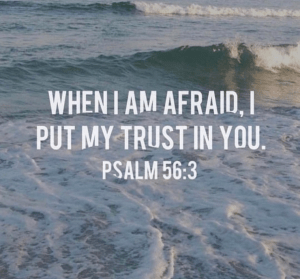
Fear of man will prove to be a snare, but whoever trusts in the Lord will be kept safe.
This is an interesting verse to reflect on.
Does it mean that when we become a person who ‘trusts in the Lord’ they will be kept from harm (kept safe)??
Or could it mean that if harm comes to a person (that they are not safe) that it is because they didn’t trust the Lord enough?
Is it possible to consider that we may have done something wrong in our faith if harm or tragedy were to befall us??
Is it possible to consider that God chooses to let us be harmed because He determined our faith was not up to His standards?
Trust in “man” and you are preparing yourself to be caught in a trap (a snare)…trust in the Lord and you will be kept safe.
I believe there is a significant amount of importance in dissecting this verse…this theology.
Too many people could get lost in confusion that they must not have enough faith otherwise they would not be in a situation where there is fear….that God would not have allowed it to happen if they had enough faith.
Dangerous territory to cross into.
These thoughts position a person to feel abandoned by God, to not feel good enough before Him, or that God is anything other than loving and sovereign.
Let’s look at this verse in a different translation to find better understanding~
The fear of human opinion disables, trusting in God protects you from that (MSG).
Don’t fall into the trap of being a coward- trust the Lord and you will be safe (CEV).
Suddenly, the context changes doesn’t it??
This is not a verse like it first seems!
See how important it is to really study the Word?? It is way too easy to take a verse out of context and make it into something IT WAS NEVER SUPPOSED TO BE.
The book of Proverbs is a compilation of sayings and writings primarily authored by King Solomon. Its purpose is to give wisdom to those who read it…for others to obtain knowledge and then to apply what is learned to their lives.
Solomon is discussing the wisdom of following the advice of a person that could easily -accidently or purposefully- lead someone astray over the wisdom in following the commands of God that will keep a person on the path of life.
The wise counsel that is given to us in this particular verse is in regards to a warning about doing what may be wrong out of fear what others may think if you don’t.
The fear of others opinion is not a fear we have discussed much…as adults, many of us may claim we are not driven or persuaded by the opinions of others.
I don’t think that is true.
Since the popularity of Facebook has grown, we -adults- have become more and more acuitely aware of what others have going on in their lives…and we would be lying to ourselves if we said that we were unaffected by the comparison game.
Before social media became a daily factor for a large majority of us, there was still the component of keeping up with the Jones’s.
Anyone else remember that saying?
Who on earth were the OG “Jones’s” we have all been trying to keep up with?
We have worried about what our houses looked like to other people: is it big enough, clean enough, decorated well enough…can you smell my cat litter, is my furniture shabby because I have two teenage sons that jump on it so my husband says “I can’t have nice things while they are here”???
We have worried about what our cars looked like to others- ever apologize when someone gets in the car because it was “dirty” or “old”??
We have worried about our kids measuring up to the successes of other kids~ there would not be such a thing as a helicopter mom if this were not true.
We worry if our kids failures will reflect poorly on us…you know I’m right about this one. It hurts to admit it, but it is true.
We worry what will happen if we speak up or speak out…Political corrected-ness has take over so many of us~ we do not want to become offensive, do we?
This kind of fear may not be as all-consuming as some of the other areas we have tackled, but it is no less significant.
Worrying what someone else may think of us leads to personal insecurity. When we become insecure we lose sight of our personal value.
And that causes us to become afraid.
It is that fear that becomes the snare that traps us.
Frankly, it is that fear that becomes the snare that enslaves us. A fear that can hold a person captive is a necessary fear to overcome.
Trusting in the Lord will keep you safe…
When I am feeling insecure, I find I am looking inward.
When I am feeling secure, I find it is most often when I am looking outside of myself.
Worrying how I look, how I perform, how I sound, how well do I write….all that is me me me stuff.
I’m stuck in my own head and place my value into the hands of others. Suddenly, what they think of me is what determines my worth.
Anyone else see the foolishness in that???
Yet, I doubt I am alone in doing it. Allowing it. Willingly falling into the snare of that release of what makes me me into the hands of another….Someone who does not know all of me. Someone who may not have my best interest in mind. Someone who does not love me the way I desire to be loved.
The empty abyss of approval found in the number of likes on Facebook can be easily wiped away when another post is seemingly ignored.
I “trended” on Twitter once…it was pretty cool~ not gonna lie. I had over 1,000 retweets on a post I had made (big deal stuff in my little world). I’m not sure why that tweet was such a big deal…but nothing I’ve shared since has come even close to that kind of recognition.
I’m thankful I don’t stay awake at night thinking about all that…but, I do wonder if or when “fame” could cross my doorstep…
It’s sad but true.
I have a dream to be a speaker. I believe that the Lord placed that dream on my heart a few years ago~ let me tell you it had to have been HIS idea because the idea never crossed my mind before! I’m a Registered Nurse for crying out loud!
I’m in school to become a minister within the Church of the Nazarene…I started attending classes to learn about the Bible so I could better explain it and apply it in life and in different teaching opportunities.
I never thought about becoming a pastor before starting those classes…I never thought about speaking the words of encouragement that are on my heart before taking those classes.
When asked about the call on my life the Lord has laid on my heart, I would be embarrassed. Who says “to be a speaker of encouragement”?? Who would declare “God has given me a gift of talking so I believe I am called to speak and tell my story of His faithfulness”?
Who would listen?
And who would listen with a straight face??
I kept silent when asked…ashamed of what people would say or think if I spoke up. In my circle of ministry, people are either lead pastors, children or youth pastors, or worship pastors. I don’t exactly fit into any of those categories.
So I was embarrassed to be so bold as to say what God has called me to do.
Instead I would talk to those I trusted the most about it and would seek earnestly for the Lord to take this dream from me because it seemed silly and impossible.
And then He would give me a glimpse of the possibility. He would provide an opportunity to use my gift.
He would grow my confidence…and that would increase my trust in Him.
Sometimes dreams don’t make sense. Sometimes opportunities seem to be improbable. Sometimes opinions are different from those around you. Sometimes life skills cause you to stand out.
It doesn’t mean your opinion is wrong. It doesn’t mean your dreams can’t come true. It doesn’t mean the opportunities won’t be plausible if you go for them.
The thing is this:
Are you positioning yourself where you are looking only within for your validation?
OR
Are you positioning yourself to trust in the Lord for who He created you to be and to do what He created you to do?
Does your validation come from others or does your value come from who you are in the Lord?
Trusting God and not the opinion of others means I am spending time with God so I know who He is so I can better trust Him with my life.
Trusting God and not the opinion of others means I choose to believe I am who He says I am because I believe He is who He says He is.
Trusting God and not the opinion of others means I am looking for His will for my life and not to others to decide my fate for me because He knows me best as my Creator and Father.
Trust in man and risk falling into a trap…Trust in God and be safe.
























 What Kind of Peace Is This?